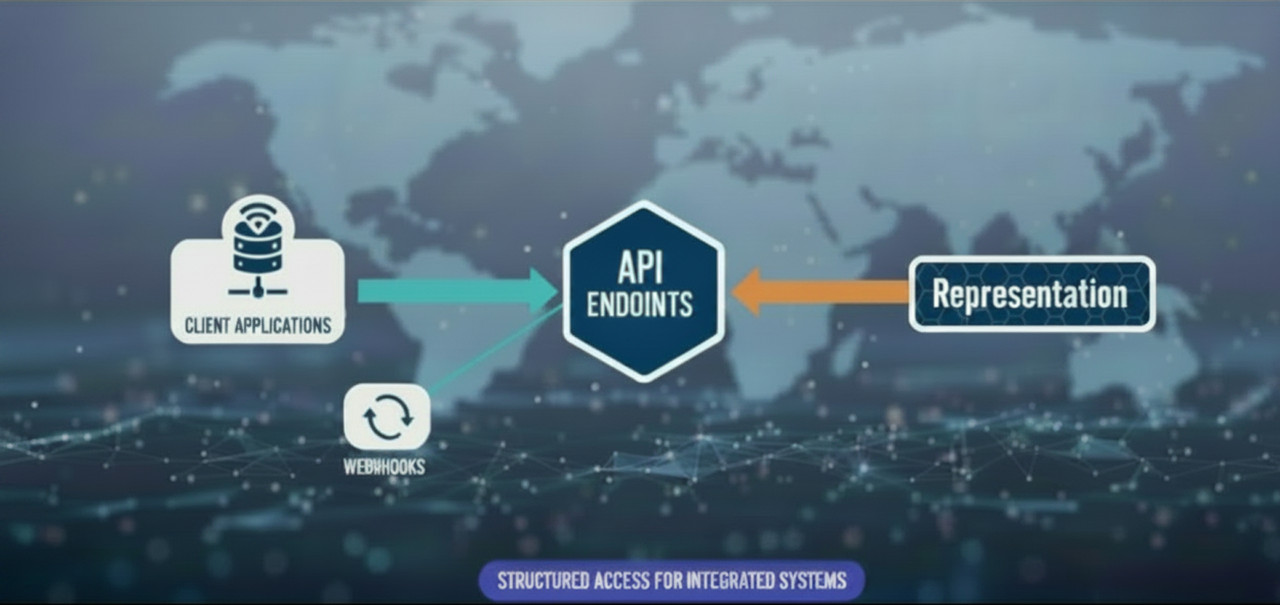
API Reference documentation

Learn about the content experience APIs using the use cases guides and reference docs below.

The reference docs for endpoints and the representations objects below provide detailed examples for the full suite of experiences available on the platform.

Reference docs

See below for details of the reference documentation for the supported concepts in the API. These are intended to be used during development as a reference rather than providing guidance on how to combine them for specific use cases.

API Endpoint reference

Explore reference documentation for the API endpoints supported by Baack to build experiences for your app or product.

Alternatively see the guides for playbooks on integrations.

API Endpoint docs

Representation reference

Explore specific object representations with example fields with constraints and limits fully defined so there are no surprises. These docs provide low level details of every field, their use and constraints.

Representation docs

Webhook docs

Explore the webhook reference documentation. Our webhooks cover over 80% of our API endpoints to give you exceptional support for building async integrations.

Learn about the available webhooks available on the platform to help drive your async integrations.

Webhook docs

Solution examples

Explore solution focused guides to understand use cases to build experiences for your product. These guides are intended to be scoped to a specific problem space, our APIs are designed to be combined across different spaces as your usage expands.

Content management system (CMS)

Headless CMS supports general page like entities with multiple content types available for the entity. Content concepts can be used standalone to deliver sophisticated content experiences with support for multiple content types including text, boolean, date/time, images and templates.

Customer relationship management (CRM)

Headless CRM allows enables managing, customers, associated companies and leads all integrated with the tools sales teams already use. Effortlessly push opportunities and engagements to one or multiple systems through a single API.

Role based access control (RBAC)

Leverage our rich role based access control model to power access control and permissions in your tools. Even if all you need is a model of access control you can use our role based access controls to model your permissions and roles. Our RBAC also supports managing groups for roles and assigning profiles to them to streamline access management.