Lord-Lieutenant’s Entrepreneurs Challenge Finalist 2026
Baack made an appearance at our first ever trade show stand in May as a finalist in the prestigious Lord-Lieutenant’s Entrepreneurs Challenge at the 140th Hertfordshire County Show.
Despite soaring temperatures, both days featured great interactions with attendees at the show and the judges, including Lord Lieutenant Robert Voss CBE and Sanjeev Bhavnani. Being selected as a finalist was hugely appreciated as it allowed us to use the event as a platform to demonstrate how Baack enables companies to build unique experiences quickly.
As Baack is predominantly an API product, and with 35,000 attendees, we anticipated few might be using content APIs. Therefore, we built two demo apps in the week leading up to the show. These mini apps showcased how Baack's capabilities allow companies to rapidly build unique experiences. We also enjoyed the very inspiring presentations from various speakers.
Understanding the YuMove story
One particular highlight was hearing John Howie's story about the early days of YuMove, which has taken off since then. A key strategy they employed early on was focusing on a highly targeted group of people.
While YuMove supplements are helpful for many, if not all, pets, the initial focus was on owners who take part in agility competitions. Because these dogs are working more, they have a greater need for joint care. Focusing on this very specific market was a critical step in their Go-To-Market strategy, which later also involved discussions with major UK retailers.
Creating engagement
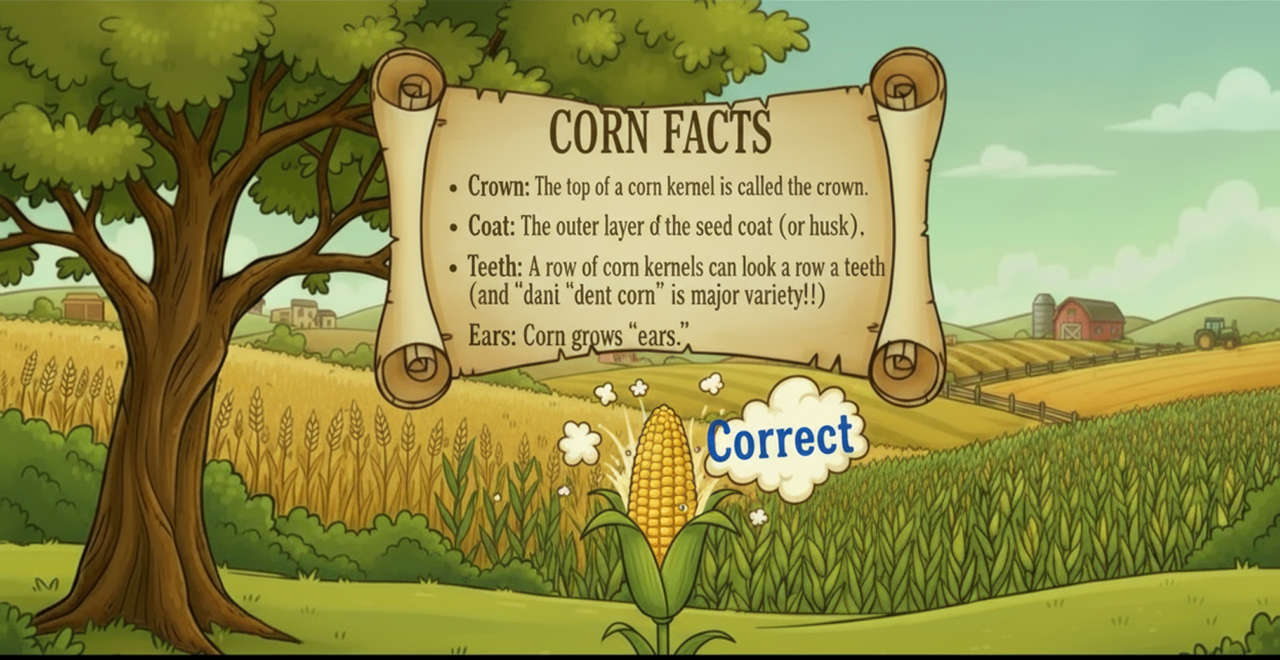
Showing digital products at a trade show is always challenging. One of the apps challenged attendees to solve a riddle with the chance to win a voucher for a local business:
Riddle me this
I have a crown but I am not royalty.
I have a coat but I am not cold.
I have teeth but I cannot bite, and I have ears but I cannot hear.
You can find me in the fields, in the silo, or right here at the show.
What am I?
A) A prize-winning dairy cow.
B) An ear of corn (maize).
C) A modern combine harvester.
D) A scarecrow.
While a simple concept, the app definitely helped attract passersby as an icebreaker. To build the app, we used a number of Baack's capabilities:
-
Customer Relationship Management to capture contestant contact details using the identity, person’s name, telephone number and email address endpoints.
-
Membership Group to track participants, with those who answered correctly being subscribed to receive an email if they win.
-
Content for the app using a single entity using text items, markdown for longer form content and image items to handle visual assets.
As the app was built in an evening before the event, there were inevitably a few content issues live on the day which one contestant spotted. The joy of having a simple inline editor that works on mobile meant I could fix the content issues live, serving as the ultimate demo of the power of separating content from presentation.
The Hacking Lab: Bringing ‘Farm View’ to Life
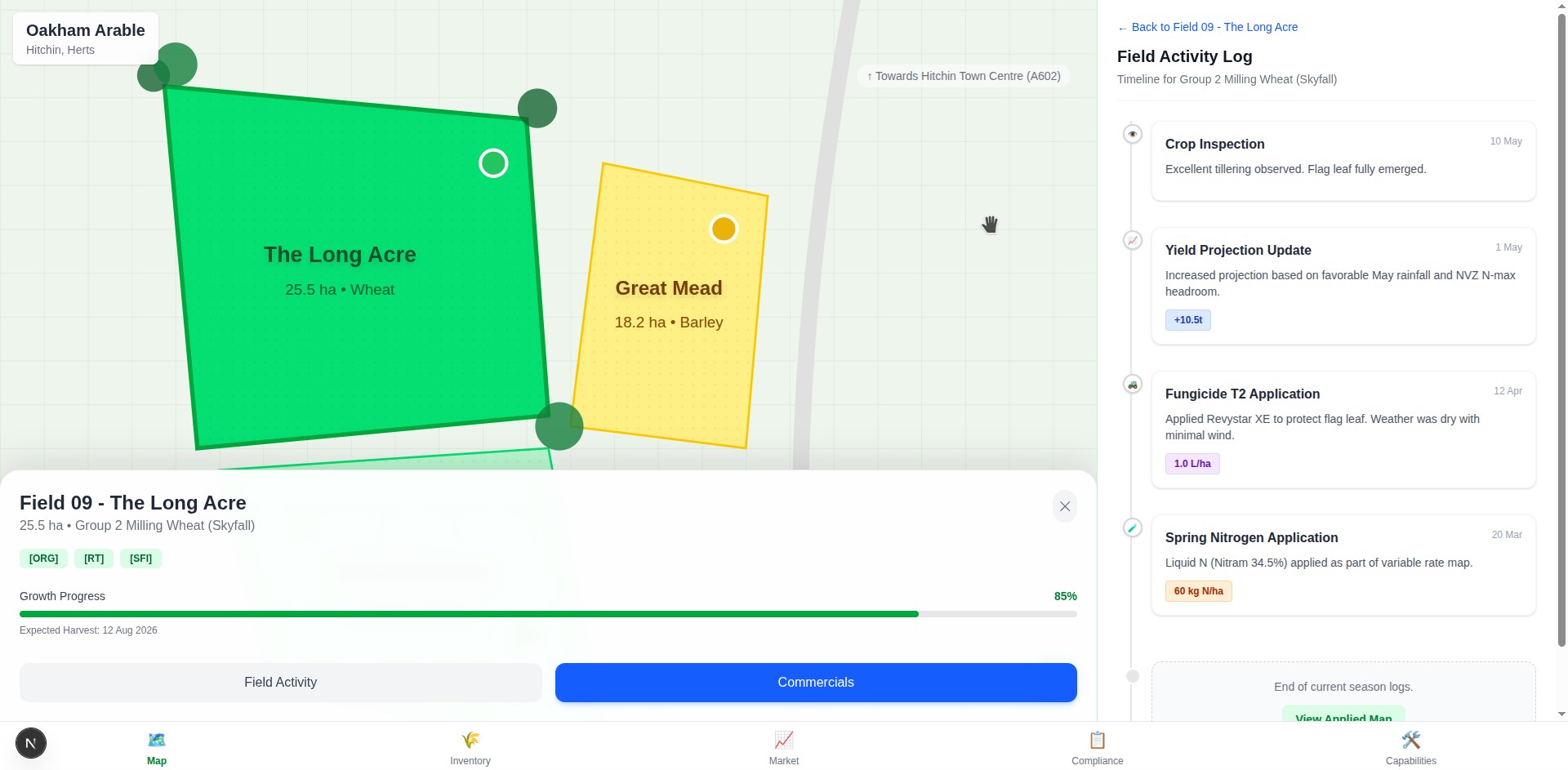
Since the entrepreneur challenge was held at a county show, I anticipated many attendees might be landowners, farmers, or somehow connected to agriculture. While you might question what a digital platform offers a farmer, you would be overlooking the ever-expanding digitization of farming.
As part of a separate project, I am also supporting another platform business in the produce industry. To explore some concepts and build a compelling prototype for a longer pitch, I also built a ‘Farm View’ app. This app allows growers to monitor projected yield, handle trades for their surplus onto a platform, book quality assessments, and generate transport passports.
I used AI with prompts to build the app quickly, including multiple screens and workflows for some of the farmers' most common pain points. The app used a hypothetical arable farm in Hertfordshire growing wheat and oats, which represent around 70% of the agricultural activity in the region.
Powered by Baack
The point of the prototype is to showcase how much of the app was powered by Baack as a scalable backend for a niche prototype, including:
- App Content via the CMS: General layout content and templates for rendering grain passports, etc.
- Farm Content: Descriptions of fields and the grain that power the grain passports and compliance certificates.
- Tasks: Organizing work like field treatments and capturing treatment details. Tasks also powered assigning work for external contractors to carry out soil assessments and treatment analysis.
- CRM / Identity Management: There are many people involved in the farm's everyday upkeep, including the farmer and staff, merchants purchasing produce, hauliers shipping surplus, soil treatment consultants, and auditors. Each of these stakeholders needs different roles, responsibility, and visibility into the farm's content using fine-grained role-based access control.
- Payments / Invoices: Used to model offers and accepted trades ([full API coming soon]). While the platform does not have a specific model for grain, it is clear that the capabilities used for this app are the core needs of practically any app, which is why we built them first. These core capabilities are the 'backend plumbing' that allows apps to focus on their core product problems. Simple tools can solve complex collaboration challenges for small to medium businesses.
If you are “vibe-coding" prototypes for products, check out how Baack can help accelerate taking your app from clickable prototype to a real system in no time.
Utility Launch of Free Unbranded QR Code Generation
To bring our signage to life at the show, we used a QR code so contestants could submit their answer to the riddle to enter the competition for a free prize. We also packaged up our QR code generator mini-app.
While other free QR code generators exist, this capability was already underway to support an upcoming feature. We launched it as part of our commitment to providing high-utility, unbranded tools for developers and startups using our platform to reduce initial costs.
A Technical Leap: Webhooks Everywhere
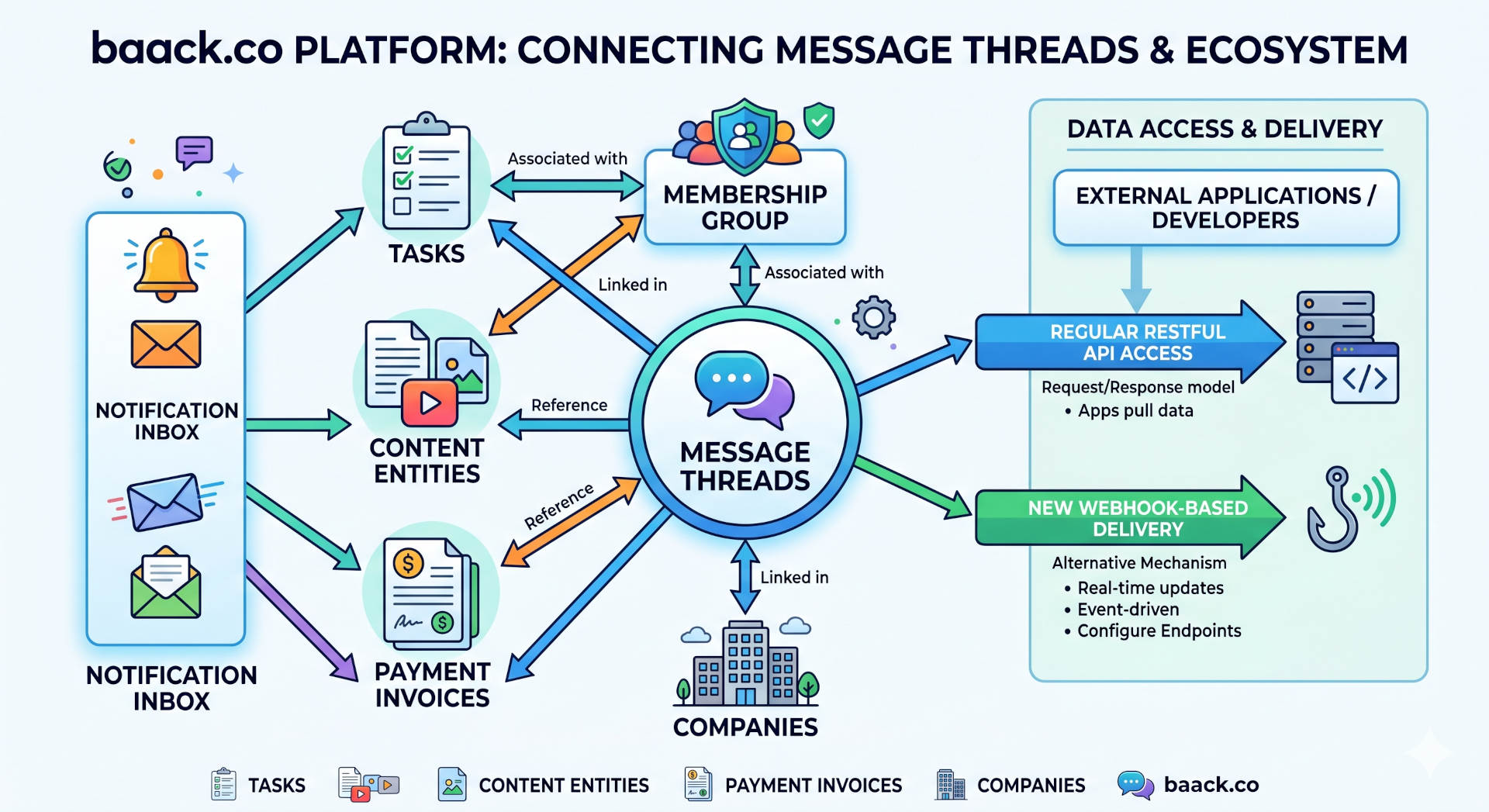
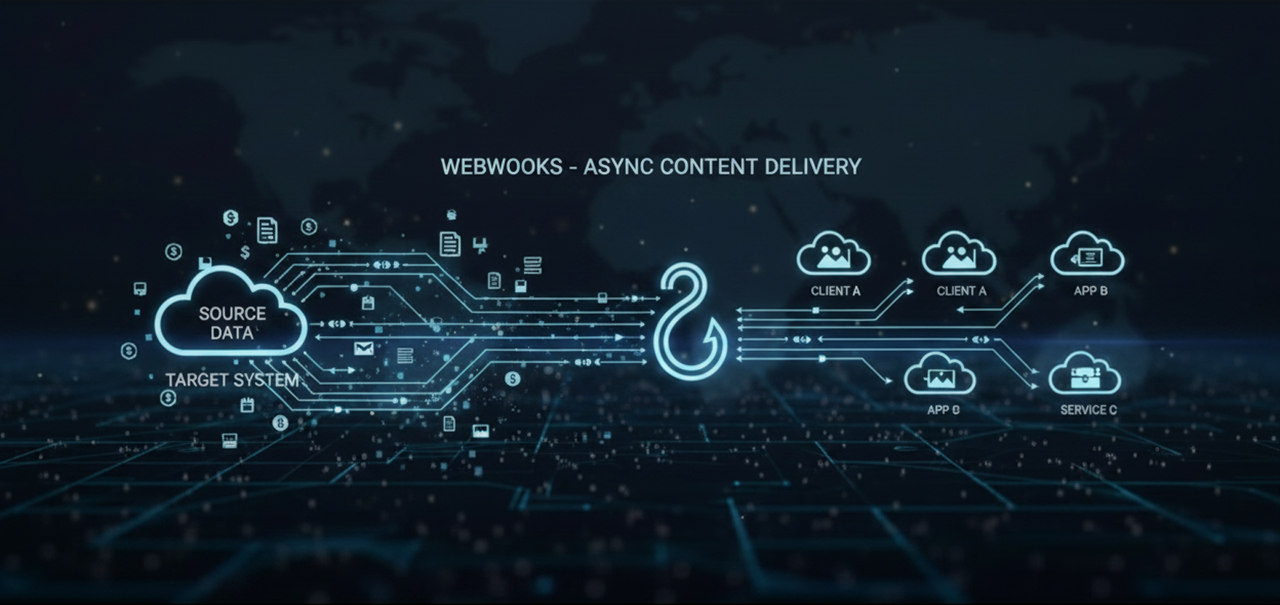
In the last few days, we have been staging what is likely the biggest step-change in our offering in some time: webhooks for practically every core API concept, with over 80% of the API surface now covered.
Few people are likely aware that our founder worked on webhooks at Meta and actually built the first webhooks in a novel infrastructure for Threads. Webhooks help provide great experiences for businesses. In industries where managing or moderating content in real-time is critical, webhooks are a table-stakes feature. The challenge is often that the way they are built leaves quite a lot of room to be desired.
Fine-Grained Subscriptions
While asynchronous integration can be really powerful for real-time applications, not every product needs to consume the full stream of events. We have made subscriptions fine-grained to individual subjects so your integration can listen to just the events it needs (e.g., only listening to message thread post creations). Each subject supports subscribing (dependent upon support) for listening to create, update, and delete events, or 'all' events for the subject.
Configurable Authentication
Most webhook offerings support only one authentication mechanism, which means apps have to build bespoke solutions for every integration. We have adopted a standards-based approach with support for HTTP BASIC, DIGEST, and BEARER authentication. We also included an HMAC-SHA256 signature as standard so you can verify the integrity of the message. This is in addition to the usual timestamp, SSL requirement, and nonce approaches to avoid replay attacks.
If your application requires mTLS, please get in touch. We will be arriving soon and would love to find integration testers.
Reliability of Delivery
From experience, we know the biggest challenge for webhooks is if they are unreliable or seem unpredictable in their delivery. Our webhooks are built in a way that means replay and debugging become a breeze, with the full delivery logic ([coming soon]) also visible in our API. The very first webhook we built was the webhook subscription so you can keep updated on changes in the state of your subscriptions, as being unsubscribed due to delivery failure is one of the most common causes for integration failure.
The platform works on delivering ‘fast then slow’: we aim to attempt delivery of the first notification (starting to connect to your system) in less than 100ms from updates being committed to the platform. If delivery fails in a retryable way, we will try again in a ‘back-off’ approach that gives you increasing periods between delivery attempts for around 24 hours. If we ultimately cannot deliver messages, we will stop the subscription.
Another aspect we think makes our webhooks unique is the fact that you can inspect the trigger, which is included in the delivery. This opens up a refreshingly simple way to develop your integration with trigger delivery replay ([coming soon]). The intention is that if you build your integration to handle replay based on idempotency keys, timestamps, or representation versions (where available), you can thoroughly test your integration. In the event of an outage, you can then just replay triggers to catch up.
To avoid overload, we have also incorporated outbound rate limiting (built for our other integrations with restrictive QPS limits) to avoid our platform overloading your system. You can configure rate limits on a per-subscription level with requests-per-minute throttling for the initial delivery attempt. If your integration requires over 6,000 deliveries per minute at peak, get in touch to discuss scaling options.
API First to Webhook First
Webhooks are often an afterthought for many platforms; however, we want to make them universally available. We started as we mean to continue by building the webhook for listener subscriptions first. This guarantees you can stay up-to-date with changes to your subscriptions.
As we are API first, our UI is still catching up, but the full capability is already launched via the API.
What this means for integrations
We believe using webhooks to move from a “pull” model to real-time, event-driven integrations, whether you are building in Next.js or a native app, will enable you to build faster, more efficient experiences. Webhooks empower even solo founders to connect their data on Baack with minimal friction.
Making the Baack Launch Official
With the addition of Webhooks and our wider testing, we are confident to have an official launch of Baack on the week of the 2nd of June 2026!. You can find our launch on DevHunt and we have also recently listed our platform on ProductHunt. Please help us get noticed by voting on our launches!